Advanced Diagnostics
Advanced Diagnostics
Advanced diagnostic techniques make it easier for our team of endodontic specialists to diagnose issues that aren't easily visible, and to understand more about your oral health by showing the interior of your mouth, including your teeth, gums, and jaw.
There are many dental concerns that may be evaluated through advanced diagnostic images and techniques, including cavities (tooth decay), infected teeth, abscesses, cysts, bone atrophy, root fractures, and tooth impactions. If these issues are identified in the early stages, you may have more treatment options that are less invasive.
Digital X-Rays
Digital imaging is a useful tool that can help to diagnose health conditions. As a part of an annual dental examination, digital x-rays can give our endodontic team an in-depth understanding that allows us to catch hidden problems to be treated before you feel pain.
Even though digital x-rays emit significantly less radiation compared to traditional film x-rays, Western Mass Endo tries to lessen each patient's exposure.
What to expect
Generally performed at the start of your appointment, digital imaging takes around 5 – 10 minutes to complete. Many patients will get a set of x-rays to show the areas that need treatment. Once they are done, the images will be uploaded to be viewed by you and our team throughout your exam. We can show you any issues and talk about possible treatments.
What is a CBCT Scan and Why Is It Important in Endodontics?
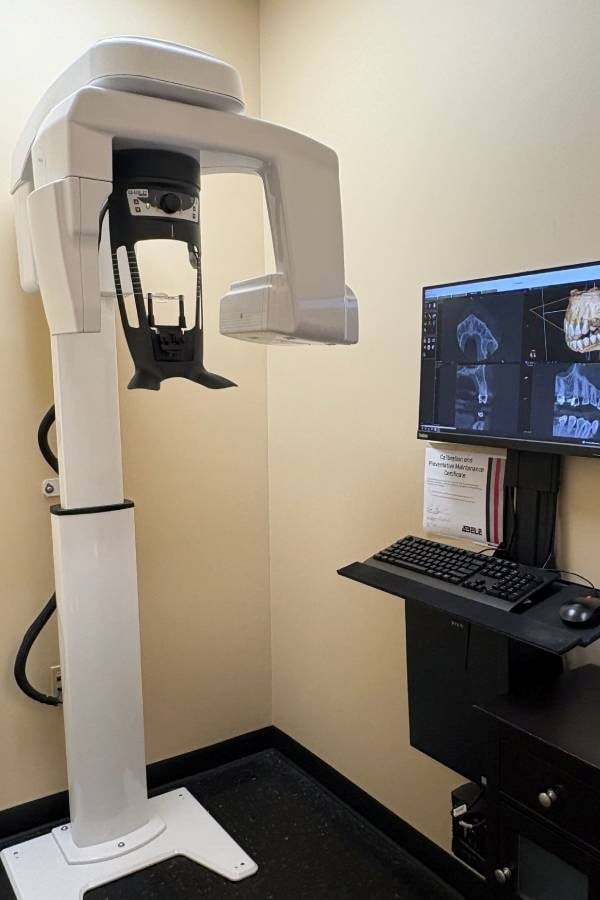
Our practice uses advanced Cone Beam Computed Tomography (CBCT) technology to provide the highest level of precision in diagnosis and treatment planning. Unlike traditional dental X-rays, a CBCT scan captures highly detailed 3D images of your teeth, bone, and surrounding structures—giving us a complete picture of what’s happening below the surface.
Why We Use CBCT Diagnostics in Endodontics:
Endodontic issues, like infected root canals, fractured teeth, or hidden anatomy, often can’t be fully seen on standard X-rays. CBCT helps us:
- Accurately diagnose complex cases
- Identify hidden canals, fractures, or resorption
- Evaluate bone structure and sinus proximity
- Plan with precision for root canal treatment or retreatment
This detailed insight allows us to deliver more predictable, efficient, and successful outcomes for our patients.
What to Expect
A CBCT scan is quick, painless, and non-invasive. You simply stand or sit while the scanner rotates around your head. The scan takes less than a minute and typically takes a small field of view around your tooth. We use strict radiation safety protocols, and the radiation dose is significantly lower than that of a medical CT scan.